
Final Fight (1989): The Arcade Beat ‘Em Up That Defined a Generation
Released by Capcom in 1989, Final Fight is widely regarded as one of the most influential beat ’em up games in video game history. The game arrived during the golden age of arcade gaming and quickly became a worldwide success due to its exciting action, memorable characters, and cooperative gameplay. Even decades after its release, Final Fight remains a beloved classic among retro gaming enthusiasts.
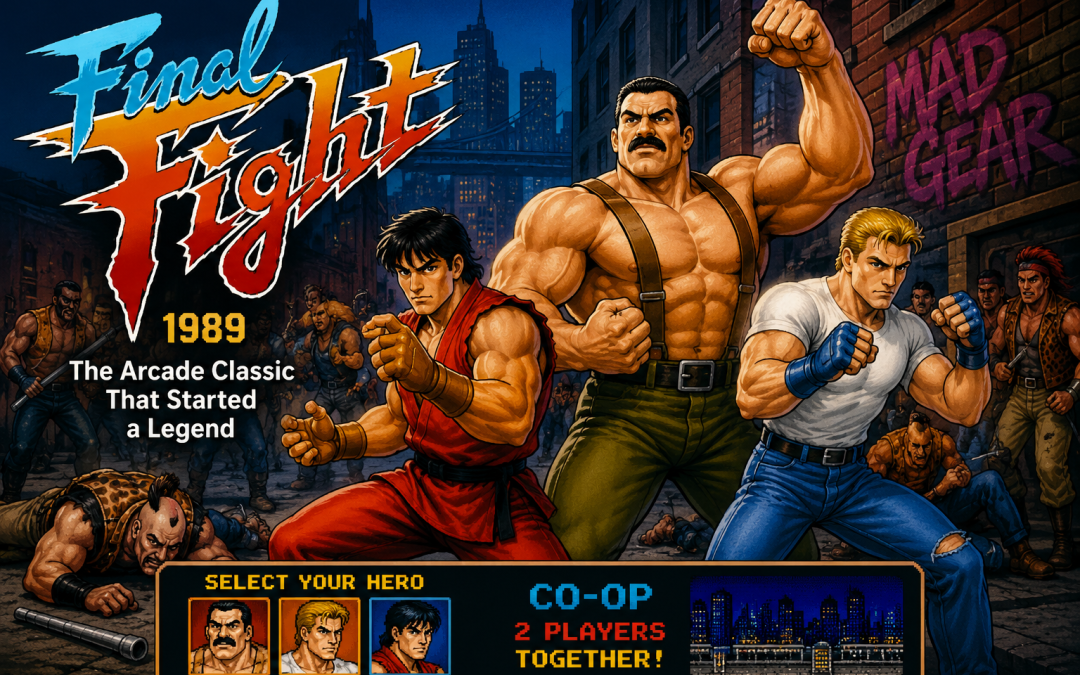
The story takes place in Metro City, a crime-ridden urban environment controlled by the notorious Mad Gear Gang. The city’s mayor, Mike Haggar, is a former professional wrestler who has dedicated himself to cleaning up the streets. When his daughter Jessica is kidnapped by the gang, Haggar joins forces with Cody Travers, Jessica’s boyfriend, and Guy, a skilled martial artist. Together, they fight their way through the city’s dangerous districts in an effort to rescue Jessica and restore peace.
One of the main reasons for the game’s popularity was its straightforward yet highly entertaining gameplay. Players could choose one of the three heroes, each with unique strengths and fighting styles. Haggar relied on powerful wrestling moves, Cody balanced speed and strength, while Guy excelled in agility and quick attacks. This variety encouraged players to experiment and find the character that best suited their playstyle.
Final Fight featured side-scrolling action where players battled waves of enemies using punches, kicks, throws, and special attacks. The game also allowed players to pick up weapons such as knives, pipes, and swords, adding depth to combat. Cooperative multiplayer gameplay was another major attraction, enabling two players to work together against the criminal gangs that infested Metro City.
The game’s graphics were impressive for its time. Large character sprites, detailed backgrounds, and fluid animations helped create an immersive arcade experience. The soundtrack complemented the action with energetic music that enhanced the atmosphere of each stage. Together, the visuals and audio contributed significantly to the game’s lasting appeal.
Another factor behind Final Fight’s success was its memorable cast of enemies and bosses. Characters such as Abigail, Rolento, and Belger became iconic villains within the series. Their distinctive appearances and challenging encounters added excitement and variety to the gameplay.
The influence of Final Fight can be seen in countless beat ’em up games released afterward. It helped establish gameplay mechanics and design principles that became standard within the genre. The game’s popularity also led to sequels, spin-offs, and appearances of its characters in other Capcom franchises, including the famous Street Fighter series.
In conclusion, Final Fight (1989) is more than just a classic arcade game; it is a landmark title that shaped the future of action gaming. Its engaging combat, memorable characters, cooperative gameplay, and lasting legacy ensure that it continues to be celebrated by gamers around the world. More than three decades after its debut, Final Fight remains a shining example of arcade excellence.